How to Start Learning the Stock Market in Nagpur: A Beginner’s Roadmap

The stock market can look complicated when you are starting out. Terms like NIFTY, technical analysis, mutual funds, options, candlesticks and stop-losses can make beginners feel that investing or trading requires a finance background.
It does not.
What matters more is learning the right concepts in the right order and understanding that market participation involves risk. SEBI advises investors to understand their goals, investment horizon and risk appetite before investing, and notes that there are no guaranteed returns in the securities market.
For someone in Nagpur looking to build stock-market knowledge, a structured learning path can make the process easier.
1. Start With the Basics
Before learning advanced strategies, understand how the market works.
A beginner should first become familiar with shares, exchanges, demat and trading accounts, order types, market participants and the difference between investing and trading. NSE’s beginner material similarly starts with the fundamentals of securities markets and explains the basic requirements for participating in the market.
This foundation helps prevent beginners from making decisions based purely on social-media tips or market rumours.
2. Learn How to Read the Market
Once the basics are clear, the next step is analysis.
Technical analysis can introduce concepts such as candlestick patterns, support and resistance, trendlines, moving averages, RSI and VWAP. ASMA’s Advanced Foundation programme includes these concepts alongside market psychology, risk management, mutual funds & SIP investments, portfolio management and financial planning.
The objective should not be memorising indicators. It should be understanding why a setup may or may not make sense in a particular market context.
3. Learn Risk Management Before Increasing Complexity
A trading strategy is only one part of the process.
Position sizing, stop losses and predefined risk are equally important. ASMA’s educational framework includes the 1% risk principle, hard stop losses, a minimum 1:2 risk-to-reward framework and daily loss limits.
This is especially relevant because SEBI has reported substantial losses among individual traders in the equity derivatives segment.
The lesson is simple: learning how to manage downside should come before chasing returns.
4. Move From Theory to Practical Market Observation
Markets behave differently when prices are actually moving.
ASMA's teaching model focuses on live-market education, with practical exposure to charts, market behaviour and trading decisions. Its training setup includes a multi-screen environment covering SENSEX, NIFTY 50, BANK NIFTY and NIFTY NXT 50 through TradingView-based analysis.
Practical observation can help learners connect textbook concepts with real-time market conditions.
5. Choose a Structured Learning Path
For beginners, ASMA's Advanced Foundation programme is designed as an approximately two-month beginner-to-intermediate programme priced at ₹29,999. Learners seeking more advanced derivatives, trading techniques, fundamental analysis and portfolio concepts can progress to the Professional Master Program, structured over approximately four months at ₹49,999.
ASMA also states that students receive continued post-course mentorship and community support.
Start With Knowledge, Not Hype
Learning the stock market is a process, not a shortcut to quick money. SEBI specifically warns investors against unrealistic-return promises, unsolicited stock tips and blindly following social-media advice.
For beginners searching for a stock market course in Nagpur, the right starting point is structured education: understand the market, learn analysis, practise risk management, observe real-time behaviour and develop discipline.
The goal is not simply to know what to buy or sell. It is to understand why a decision is being made—and what happens when that decision is wrong.
About ASMA
Advait Stock Market Academy (ASMA), established in 2004, provides practical stock-market education in Nagpur covering technical analysis, trading, derivatives, investing, risk management and market psychology.
Related Articles
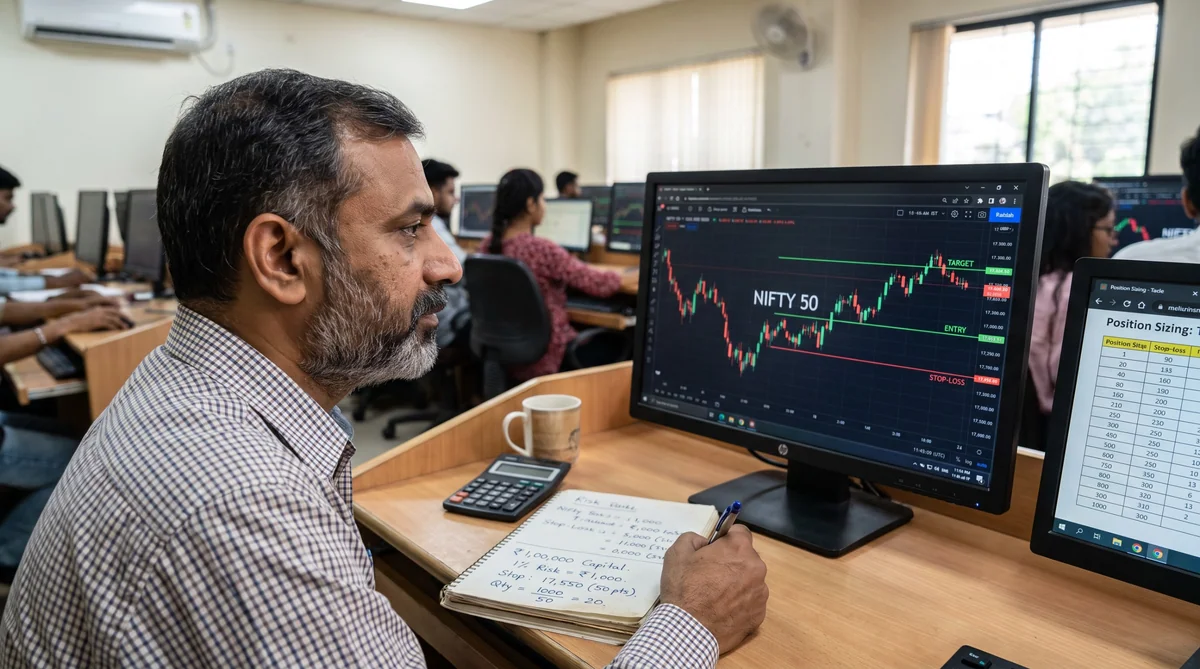
Education First, Predictions Never: The ASMA Philosophy
Most people's introduction to the stock market is a tip. By the time they ask to be taught properly, they've usually lost money. Discover why ASMA focuses on education over shortcuts.

Why Live Market Training Matters for Stock Market Beginners in Nagpur
Discover why live-market training matters for beginners and how practical education, risk management and trading psychology can improve stock market learning in Nagpur.
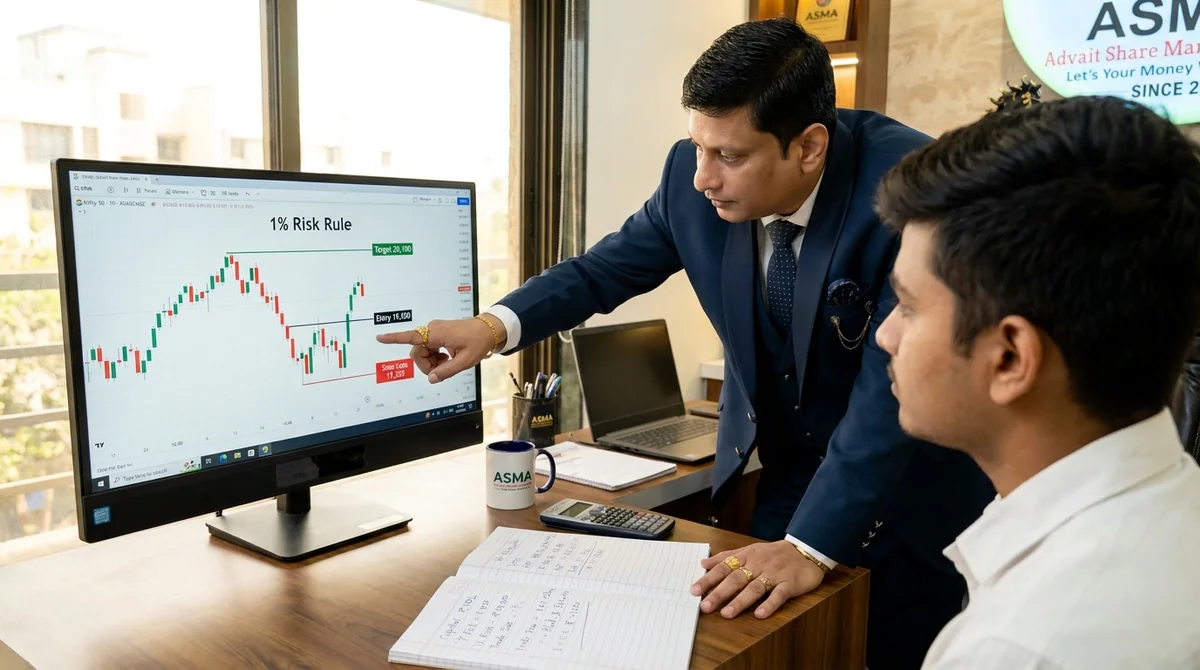
The 1% Rule: Why Trading Survival Starts With Knowing How Much You Can Lose
Understand the 1% Risk Rule, position sizing, stop losses and risk-to-reward ratios—and why disciplined risk management matters in stock market trading.
Continue Learning with ASMA.
Explore practical stock market training programs designed to build market understanding.