Why Live Market Training Matters for Stock Market Beginners in Nagpur

Learning the stock market from books and videos can build a strong theoretical foundation. But understanding how to make decisions when prices are moving in real time requires a different kind of experience.
This is where live-market stock market training becomes valuable.
For beginners, the difference between studying a completed chart and watching the market unfold live can be significant. A historical chart shows what happened. A live market teaches you how to observe price movement, analyse changing conditions and manage decisions under uncertainty.
What Is Live-Market Training?
Live-market training means learning during actual market hours while observing real-time price movement, charts, volume and market behaviour.
Students can see how concepts such as support and resistance, candlestick patterns, VWAP, moving averages and trend analysis are applied as the market develops. ASMA's curriculum specifically includes these technical-analysis concepts along with market psychology, risk management and portfolio management.
This practical exposure helps connect theory with actual market conditions.
Why Practical Exposure Matters
A setup that looks perfect on a historical chart may behave very differently in real time. Breakouts can fail, momentum can change and volatility can increase unexpectedly.
Live learning allows students to observe these situations rather than only reading about them afterward.
ASMA focuses on practical live-market education and uses a multi-chart trading setup covering major indices such as NIFTY 50, BANK NIFTY and SENSEX, supported by TradingView-based analysis.
The purpose is not simply to watch multiple charts. It is to understand market context and develop a structured decision-making process.
Risk Management Must Come First
Trading is not only about identifying opportunities. Managing potential losses is equally important.
SEBI's July 2024 study found that 7 out of 10 individual intraday traders in the equity cash segment incurred losses.
This highlights why beginners should learn risk management alongside trading strategies.
ASMA's educational framework includes principles such as position sizing, hard stop losses, defined risk-to-reward parameters and daily loss limits.
SEBI also cautions investors against guaranteed-return claims and unrealistic promises.
Trading Psychology Is Part of the Process
Fear, greed and FOMO can influence decisions just as much as market analysis.
ASMA therefore includes market psychology and mindset development in its curriculum, covering emotional discipline, FOMO and managing losing streaks.
The objective is to develop a repeatable process rather than encourage impulsive decisions.
Learn the Market While It Is Moving
For someone searching for a stock market course in Nagpur, practical exposure can be an important factor to consider.
Established in 2004, Advait Stock Market Academy (ASMA) combines live-market training with technical analysis, risk management, trading psychology and continued mentorship.
Ultimately, the goal of stock market education should not be to make trading appear easy. It should help learners understand markets, recognise risk and make more informed decisions.
Learn the concepts. Observe the market. Build the discipline.
Related Articles
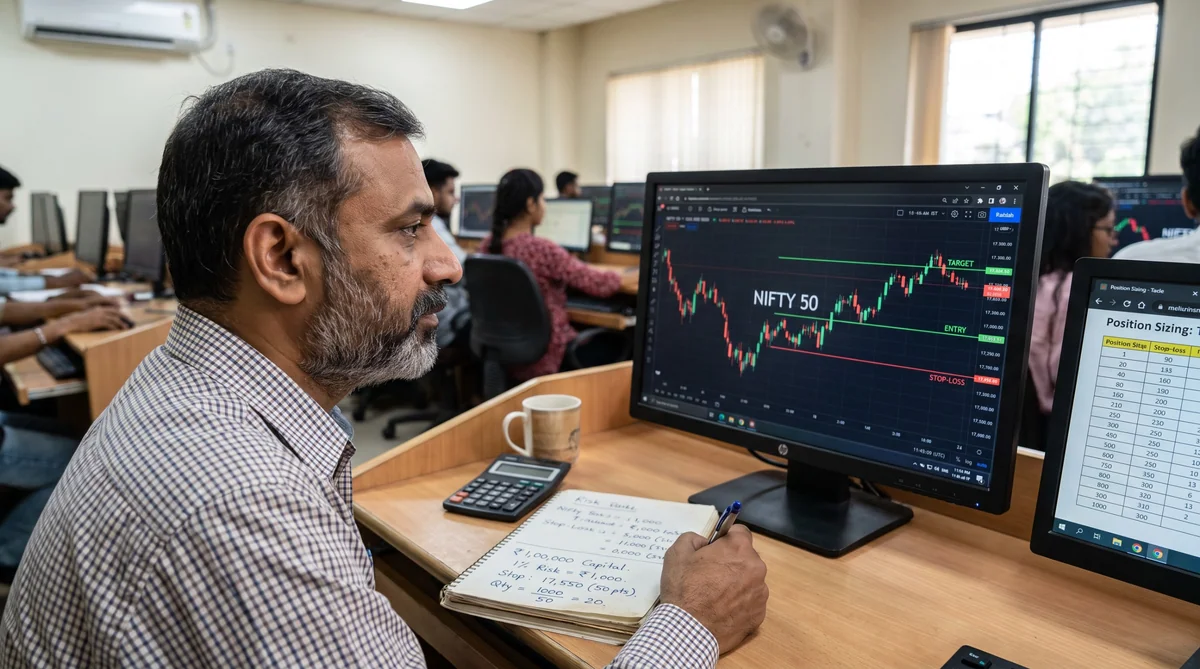
Education First, Predictions Never: The ASMA Philosophy
Most people's introduction to the stock market is a tip. By the time they ask to be taught properly, they've usually lost money. Discover why ASMA focuses on education over shortcuts.
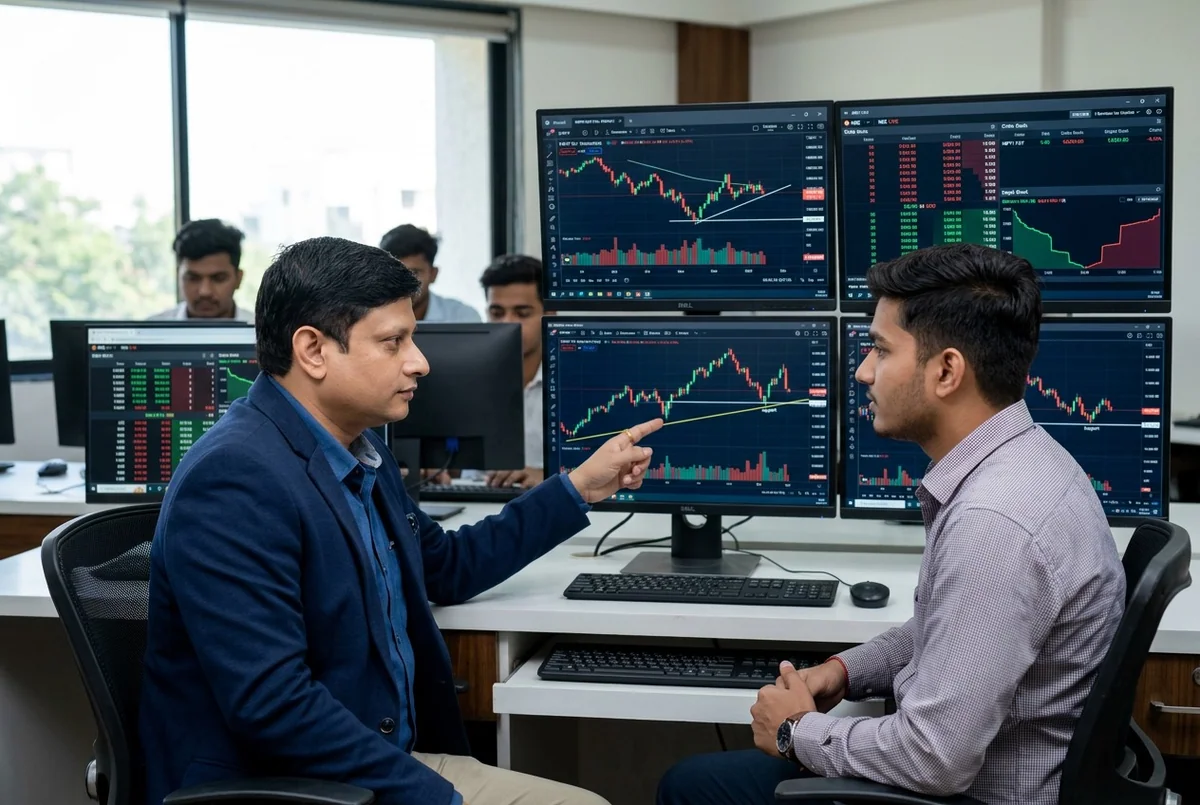
How to Start Learning the Stock Market in Nagpur: A Beginner’s Roadmap
Learn how to start your stock market journey in Nagpur with a structured roadmap covering market basics, technical analysis, risk management and practical training.
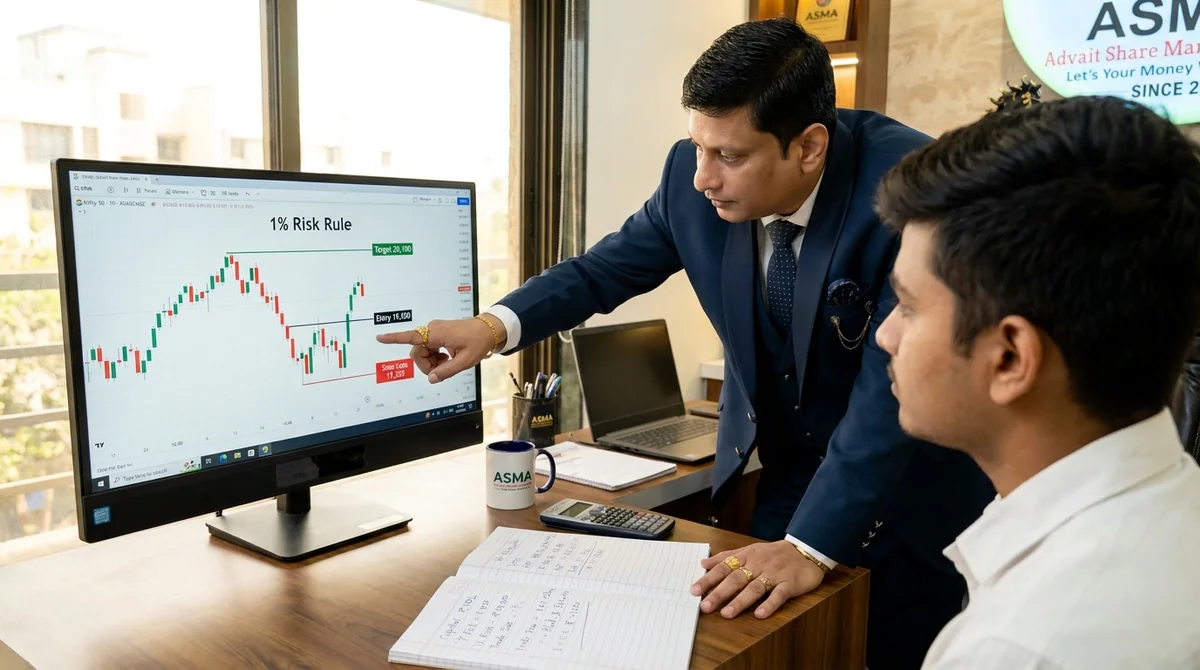
The 1% Rule: Why Trading Survival Starts With Knowing How Much You Can Lose
Understand the 1% Risk Rule, position sizing, stop losses and risk-to-reward ratios—and why disciplined risk management matters in stock market trading.
Continue Learning with ASMA.
Explore practical stock market training programs designed to build market understanding.